
The Montessori Approach
Montessori is an approach to education developed by Dr Maria Montessori through her observation of children. It recognises that children are active learners, building understanding through exploration, discovery and purposeful activity.
The environment is carefully prepared for each stage of development, with materials and activities that children can explore for themselves. The adult observes, offers lessons and guides each child towards greater independence. Alongside language, mathematics and knowledge of the world, Montessori gives attention to children’s social and emotional development and their relationships with others.
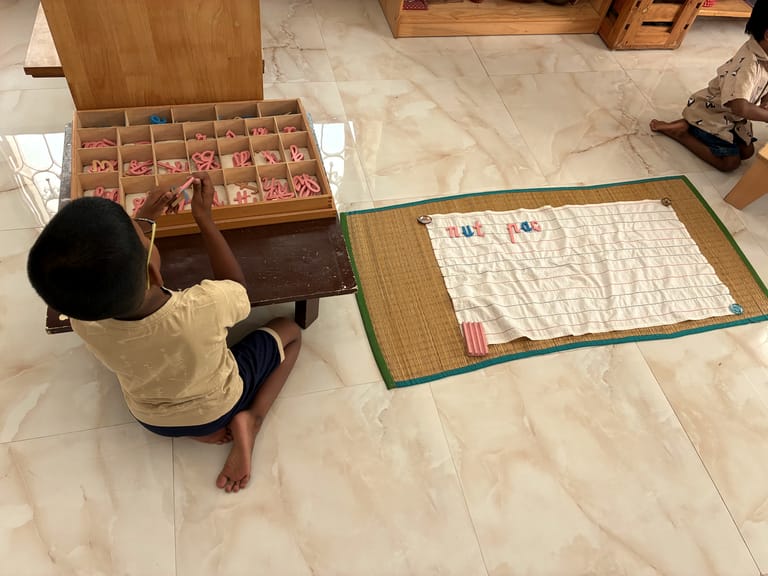
Montessori videos
The Montessori Environment: What Makes It Different?
The Prepared Environment
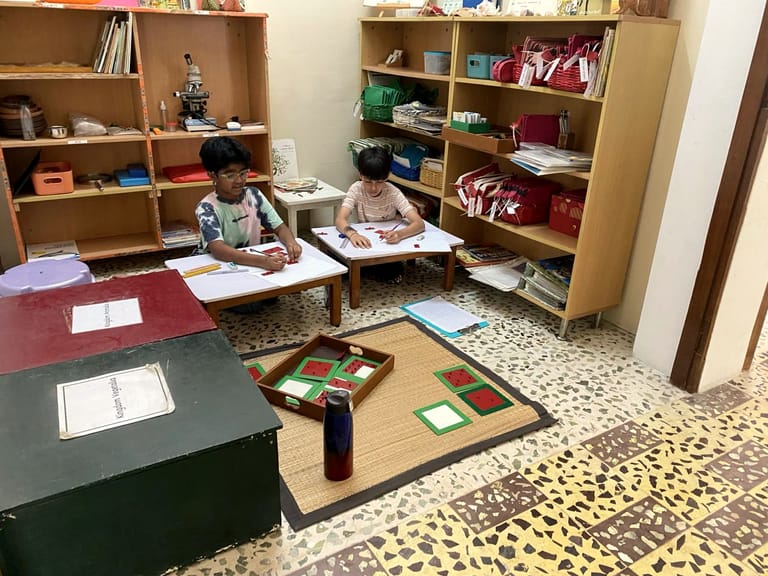
When you enter an authentic Montessori space, you will notice a thoughtfully prepared environment where everything has a purpose and is carefully arranged with the developmental needs of the child in mind. A sense of order is present in every aspect of the environment. Materials are placed within the children’s reach, allowing them to move freely, make choices and work with increasing independence.
Mixed-age classrooms
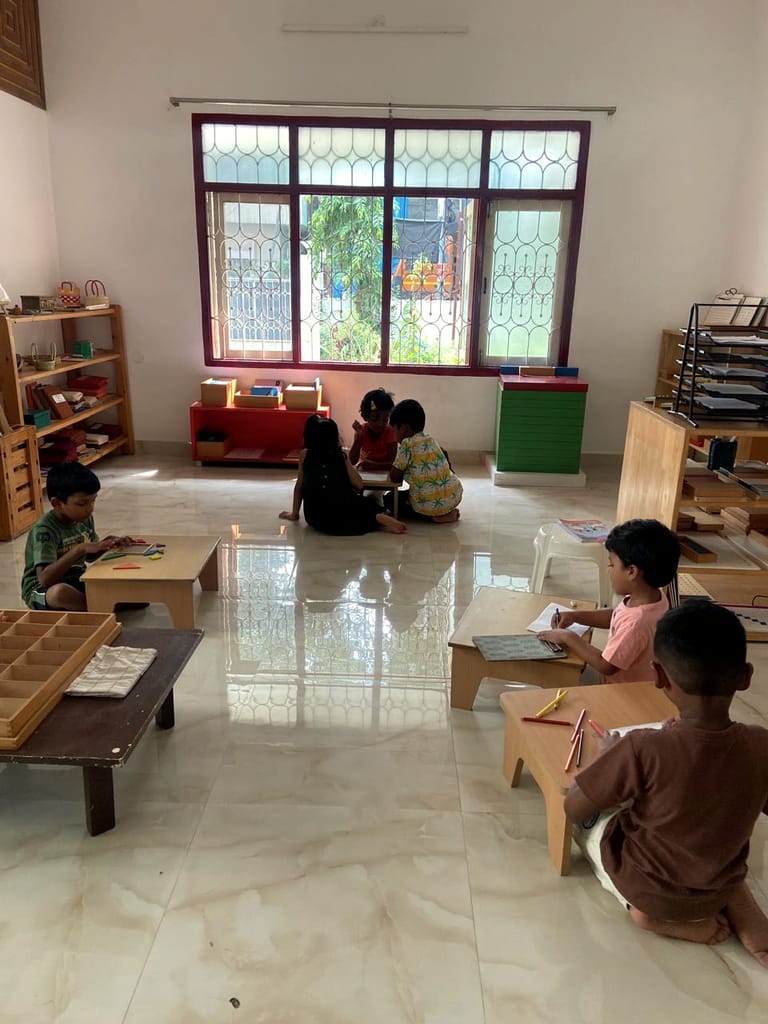
You will also notice children of different ages working alongside one another. Younger children observe and learn from older children, while older children have opportunities to help, guide and develop a sense of responsibility towards the younger ones.
Learning in a Montessori environment
In Montessori, children first experience concepts through their senses before gradually understanding them at an abstract level. They learn by seeing, hearing, touching, moving and exploring.
Children learn through their hands. Before a child works with numbers on paper, she first holds and explores quantities in her hands and experiences them concretely. Children listen to sounds and engage in conversation before they learn to write.
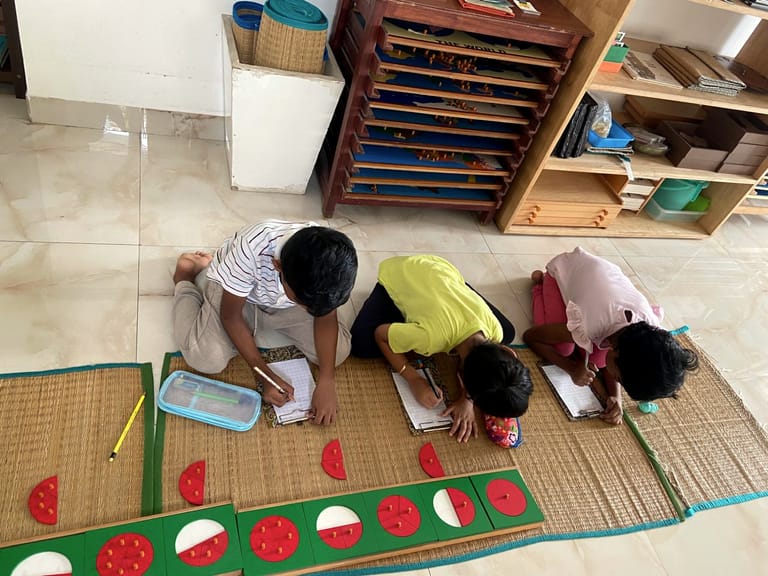
You may see one child carefully pouring water, another working with numbers, and another repeating a familiar activity for the joy of mastering it. Each child is engaged in purposeful work at their own pace, developing concentration, coordination and independence along the way. They are given the time, freedom and materials to explore, repeat and build their understanding for themselves.
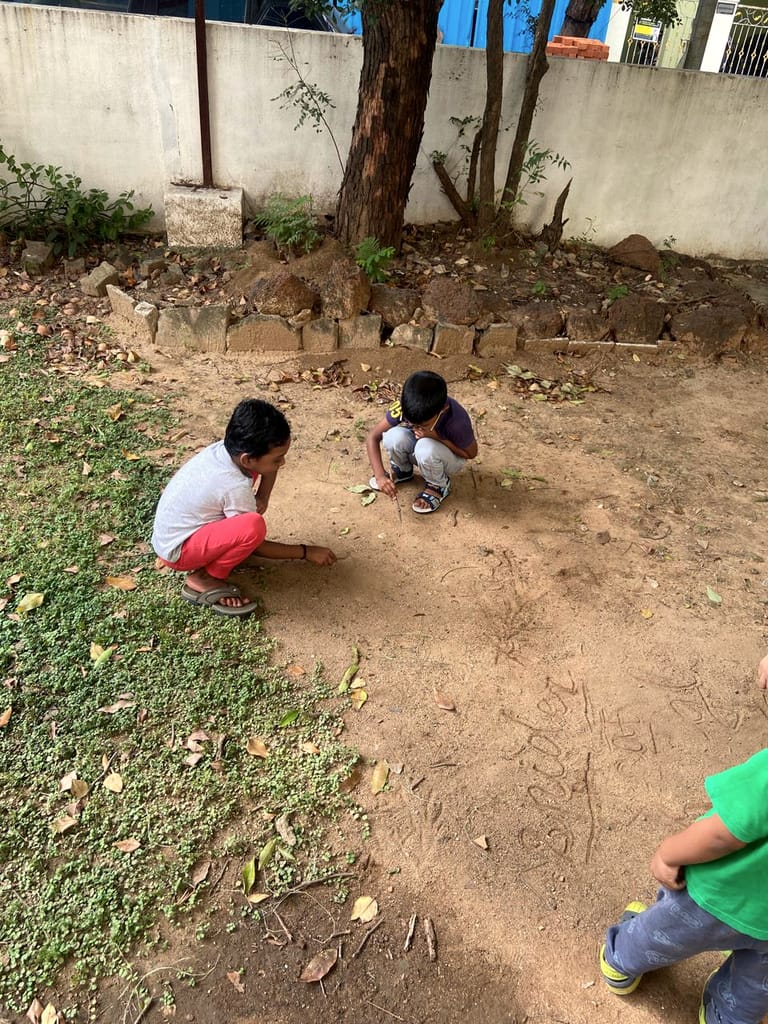
Learning also extends beyond the classroom. Children have access to an outdoor environment where they can connect with nature, observe the world around them, and learn through movement and exploration.
The Montessori guide (teacher) in the classroom
The Montessori adult is an observer, guide and facilitator. Rather than directing every moment, the adult carefully observes each child, prepares the environment and offers individual lessons called presentations when the child is ready. The aim is to give children the freedom to explore and work independently, while being present to support, guide and protect their development. Observing each child in the classroom is the most important work of the adult.
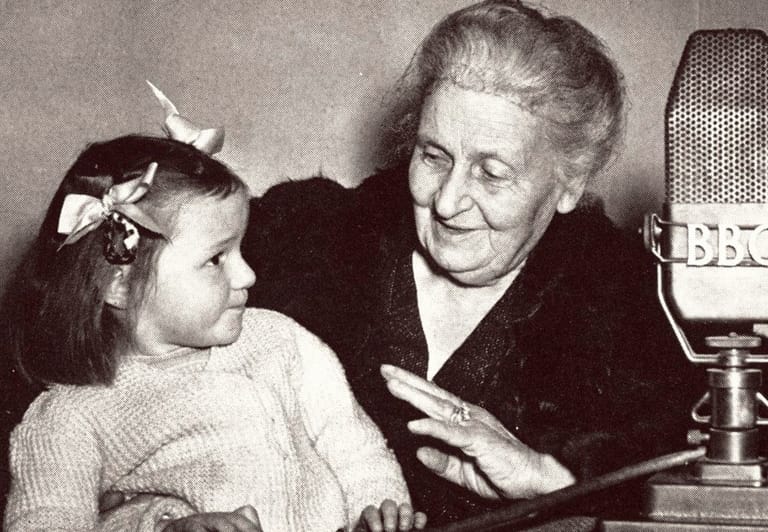
The child's development follows a path of successive stages of independence and our knowledge of this must guide us in our behaviour towards him. We have to help the child to act, will and think for himself. This is the art of serving the spirit, an art which can be practised to perfection only when working among children.
Visit us
We welcome everyone interested in the Montessori philosophy to visit us. We invite parents, teachers, caregivers and other curious adults to experience Montessori. Our environment is open to visitors by prior appointment.
We also conduct a free Introduction to Montessori workshop every month.
Let’s talk about your child.
Bring your questions about the school and tell us what you are looking for. We can start there.
 WhatsApp Us